I removed the Autism Awareness bumper magnet from my car today. I took it off for the car wash, as usual, because I’ve lost them that way. This time, though, I didn’t put it back on.
A friend asked me recently if my life isn’t sometimes “all autism, all the time,” and if that doesn’t get to be too much. I had to admit, a lot of times, it does. I know it’s been too much for my older son. Being the brother of a kid with autism has been a major theme of his life. I do love my work, which involves giving referrals, information, guidance, and advice to parents, teachers, other professionals, and sometimes adults on the Spectrum. It’s purposeful and rewarding. But then I go home to autism.
At one time I needed the bumper sticker; and the t-shirt and the jewelry. I hoped these things would offer a shorthand to explain my “bad parenting” to insulting strangers. Certainly, people ought to be aware of autism and how profoundly it affects so many people’s lives.
But can a bumper sticker really do all that?
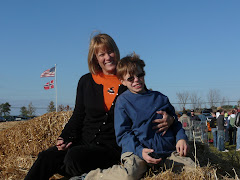
We are all so much more than a bumper sticker. My son is who he is: wonderfully and perfectly and happily, Colin. I suspect that without the autism he’d still be a handful – defiant, busy, active, sassy, and a challenge to the most patient parenting skills. There are places we still can’t easily and comfortably go and things we can’t do that other people get to do all the time. But want to stop fighting it, stop being angry and feeling gypped. I’m learning to accept, to be content. I’ve decided it’s unhealthy for both my children to be raised to think in such restricted terms about life – theirs or mine. There is so much we can be and do.
At the same time, autism has given me a purpose. It’s given me a job that I find satisfaction from after two decades of wondering what the hell work was for, other than earning money to get away from work. Autism was the catalyst that gave me something, finally, that I felt strongly enough about to get me writing, something that I finally felt I had something to say about that might be of value.
So while I intend to no longer allow it to define my son, define my life, I thank God for the opportunity to live my life a different way, to slow down, to enjoy, to be content, and aim to provide the same for my children and the people I talk to who might feel freer doing the same.
Sunday, January 25, 2009
Thursday, January 1, 2009
Acceptance is not giving up.
Parents who are focused on curing their children of autism will continue to hear "acceptance" as "giving up.” I’m realistic: these things take time. The proven cause and cure will not come during my son’s childhood, and probably not his lifetime. Curing or “recovering” him with special diets, supplements, and dangerous treatments such as chelation or hyperbaric are pipe dreams. People do these things, see improvements that would have happened anyway, and think one has to do with the other.
I put my energy on improving his quality of life instead of chasing pipe dreams and to love my son for what he is. How is that “giving up?”
Family members who saw my son over the holidays after not seeing him for a year were AMAZED at his gains. He's calmer, his speech is much more interactive, and he comes up with original thoughts. What did we do different this past year? We did NOTHING, except to take him off the anti-anxiety and mood-stabilizing medications. He was taken off for reasons having to do with coordinating and agreeing with my ex-spouse and his household, but I had suspected the meds were not helping, anyway. The appointments and the side effects were sure a major source of stress I’m now happy to live without.
At one time I was sure the meds were making a big difference. If I'd had him on the Gluten-Free diet and saw the gains we saw this summer I would have probably been convinced THAT was working. (Yes, we've tried it -- and saw no results). If we'd been in denial enough to subject him to hyperbaric I might right now be extolling the virtues of that. And so on.
I know parents who throw everything but the kitchen sink at their kid and tell parents of newly diagnosed kids that if they aren't doing the same, they're bad parents. They use heroic phrases like "never give up!" and "do all you can!" to justify their cruelty. It’s a new twist on the one-upmanship parents have been doing since someone’s Junior Caveman grunted at an earlier age than someone else’s precious little Morg III.
WHO REALLY is all that trumpeting and cheerleading for? Are these so-called “Autism Warrior Mothers” really doing all this crazy stuff for their children’s benefit? If they loved their children so much, why do they so desperately want to change them?
I put my energy on improving his quality of life instead of chasing pipe dreams and to love my son for what he is. How is that “giving up?”
Family members who saw my son over the holidays after not seeing him for a year were AMAZED at his gains. He's calmer, his speech is much more interactive, and he comes up with original thoughts. What did we do different this past year? We did NOTHING, except to take him off the anti-anxiety and mood-stabilizing medications. He was taken off for reasons having to do with coordinating and agreeing with my ex-spouse and his household, but I had suspected the meds were not helping, anyway. The appointments and the side effects were sure a major source of stress I’m now happy to live without.
At one time I was sure the meds were making a big difference. If I'd had him on the Gluten-Free diet and saw the gains we saw this summer I would have probably been convinced THAT was working. (Yes, we've tried it -- and saw no results). If we'd been in denial enough to subject him to hyperbaric I might right now be extolling the virtues of that. And so on.
I know parents who throw everything but the kitchen sink at their kid and tell parents of newly diagnosed kids that if they aren't doing the same, they're bad parents. They use heroic phrases like "never give up!" and "do all you can!" to justify their cruelty. It’s a new twist on the one-upmanship parents have been doing since someone’s Junior Caveman grunted at an earlier age than someone else’s precious little Morg III.
WHO REALLY is all that trumpeting and cheerleading for? Are these so-called “Autism Warrior Mothers” really doing all this crazy stuff for their children’s benefit? If they loved their children so much, why do they so desperately want to change them?
Thursday, December 25, 2008
A Beautiful Spirit Having an Autistic Experience
It's been said that we aren't "human beings having a spiritual experience but spiritual beings having a human experience." That would explain why some people have a more spiritual life; they find it easier to tap into the spiritual being inside their body. It would also explain why so many of us don't tap in until something radical happens in our human experience - a death, an illness, a loss - to really shake up our perception of what matters. With these human experiences comes the realization that it can all be gone in an instant, and what are we left with, if not the spirit?
What happens, then, with people who aren't "spiritual?" Instead of being a human being who either doesn't believe in all that "stuff" or who just doesn't choose to tap into that side of life, perhaps it's that some spiritual beings are struggling with human shells that won't let them push through.
So if we are spiritual beings having a human experience, what's that mean for people who have autism? Are they spiritual beings having autistic human experiences?
People sometimes point out to me that my son, Colin, is so joyful, so cheerful, so full of life, light, and spirit. I didn't always see it. I've battled so many times to get him to do what I wanted him to do, like get dressed and out the door, or to stop him from doing something that brought him joy but either scared the bejeebers out of me or made a mess, like waking up in the middle of the night to climb the cupboards to eat Ovaltine with a spoon. Where was my joy in wiping down the walls or hunting him down after an escape? The joy was all his.
Colin's spirit enjoys life. It loves movement. It loves smelling the world and the people in it. It loves noise - hearing it and making it. It's the people around Colin who have a problem, not him.
The day that I started to see through the wiggly, wiry little autistic human body and see Colin's spirit was one of the best days of my life. It was freeing for my spirit. I finally understood what my mother meant when her friends asked her if Colin would be "okay" and she'd reply, "of course Colin will be okay! He's Colin!"
Colin isn't miserable, but I was making myself miserable worrying about him. I see other kids, some with autism, others with other diagnoses, in bodies that distract the world around them from seeing their beautiful spirits. Not one of those kids ever looked miserable to me, except when they couldn't get the rest of us to understand.
That's where I think the cure movement is getting it wrong. Are they really doing it for the "afflicted" or for themselves? Talk to any high-functioning adult - Temple Grandin comes to mind immediately - who used to be more "autistic" as a child. Read the words of a non-verbal person with autism, such as Sarah Stup. These people want to be accepted for their uniqueness, for their spirit within, and not judged by what they look like or act like in their human bodies. They want us to see them, not cure them.
Doesn't it seem we humans eradicate or cure one human disease or disorder, only to have another take its place? Maybe we're not meant to fix this human body. Maybe our frailty, our mortality IS the point, and God's way of telling us that it's not the human body - the human experience - that He wants us to live for. Instead, the joy and the light and the life all can be found if you look past it and into the human spirit.
*Quote by French philosopher Pierre Teilhard de Chardin.
What happens, then, with people who aren't "spiritual?" Instead of being a human being who either doesn't believe in all that "stuff" or who just doesn't choose to tap into that side of life, perhaps it's that some spiritual beings are struggling with human shells that won't let them push through.
So if we are spiritual beings having a human experience, what's that mean for people who have autism? Are they spiritual beings having autistic human experiences?
People sometimes point out to me that my son, Colin, is so joyful, so cheerful, so full of life, light, and spirit. I didn't always see it. I've battled so many times to get him to do what I wanted him to do, like get dressed and out the door, or to stop him from doing something that brought him joy but either scared the bejeebers out of me or made a mess, like waking up in the middle of the night to climb the cupboards to eat Ovaltine with a spoon. Where was my joy in wiping down the walls or hunting him down after an escape? The joy was all his.
Colin's spirit enjoys life. It loves movement. It loves smelling the world and the people in it. It loves noise - hearing it and making it. It's the people around Colin who have a problem, not him.
The day that I started to see through the wiggly, wiry little autistic human body and see Colin's spirit was one of the best days of my life. It was freeing for my spirit. I finally understood what my mother meant when her friends asked her if Colin would be "okay" and she'd reply, "of course Colin will be okay! He's Colin!"
Colin isn't miserable, but I was making myself miserable worrying about him. I see other kids, some with autism, others with other diagnoses, in bodies that distract the world around them from seeing their beautiful spirits. Not one of those kids ever looked miserable to me, except when they couldn't get the rest of us to understand.
That's where I think the cure movement is getting it wrong. Are they really doing it for the "afflicted" or for themselves? Talk to any high-functioning adult - Temple Grandin comes to mind immediately - who used to be more "autistic" as a child. Read the words of a non-verbal person with autism, such as Sarah Stup. These people want to be accepted for their uniqueness, for their spirit within, and not judged by what they look like or act like in their human bodies. They want us to see them, not cure them.
Doesn't it seem we humans eradicate or cure one human disease or disorder, only to have another take its place? Maybe we're not meant to fix this human body. Maybe our frailty, our mortality IS the point, and God's way of telling us that it's not the human body - the human experience - that He wants us to live for. Instead, the joy and the light and the life all can be found if you look past it and into the human spirit.
*Quote by French philosopher Pierre Teilhard de Chardin.
Monday, October 13, 2008
No longer "consumed"
It's time to rename this Blog. When I first started writing it, I named it "Consumed By Autism." I have no idea why I chose to call my Blog that - maybe I just thought it sounded cool - but it closely reflected how I felt at that time. "Overwhelmed By Autism" would have been even more accurate of my state of mind up until this year. "Overwhelmed By Everything" would have nailed it, actually.
This past year I have come to the realization that all the stuff that has happened to me in my life had to happen to bring me where I am today, and that all the things that I consider the "worst" events in my life were, in fact, among the best things to happen to me. My divorce freed me. It sounds trite, but it's true.
More significantly, having a son with autism has taught me to have more patience, to see joy and beauty where it might not be immediately apparent, and to live in the moment rather than being in a constant state of panic over the future or being in a constant state of anger over what could have or should have been. When I imagine having two "typical" sons today, I know that I would still be stuck in an unhappy life, worrying about inconsequential crap, driven by having money and lots of stuff and stuck in some job or other I hate and receive no satisfaction from. You could ask me, "but what about even BEFORE that? What if you'd married someone else and had different kids? Maybe then you wouldn't have gone through any it and your life would have been easier, better."
Who knows what could have been? Why drive myself crazy even trying to go back, unravel my life, figure out where I "went wrong" and wonder what could have been done "right?" That's for the movies. I believe I needed all of it. I've noticed a lot lately people all around me who are unsatisfied. They have perfectly "normal" children, well-paying jobs with great benefits, seemingly happy marriages, cool stuff, and they still find stuff to bitch about. Without the life I've had, without having my son the way he is, I'd be one of those people. It is said that it's better to learn from other's mistakes rather than one's own, but does anyone really learn that way - REALLY, TRULY learn?
I've renamed this Blog "Autism Co-Parent." It's probably not the best title, either, but I'd like to be useful to someone and what do I have to offer? I have my experiences. My perspective. I've looked, and I haven't seen anything out there about parenting a child with autism cooperatively with an ex, so that's where I'm going to go with this Blog. I don't have all the answers, of course, but maybe, just maybe, someone COULD learn from MY mistakes.
This past year I have come to the realization that all the stuff that has happened to me in my life had to happen to bring me where I am today, and that all the things that I consider the "worst" events in my life were, in fact, among the best things to happen to me. My divorce freed me. It sounds trite, but it's true.
More significantly, having a son with autism has taught me to have more patience, to see joy and beauty where it might not be immediately apparent, and to live in the moment rather than being in a constant state of panic over the future or being in a constant state of anger over what could have or should have been. When I imagine having two "typical" sons today, I know that I would still be stuck in an unhappy life, worrying about inconsequential crap, driven by having money and lots of stuff and stuck in some job or other I hate and receive no satisfaction from. You could ask me, "but what about even BEFORE that? What if you'd married someone else and had different kids? Maybe then you wouldn't have gone through any it and your life would have been easier, better."
Who knows what could have been? Why drive myself crazy even trying to go back, unravel my life, figure out where I "went wrong" and wonder what could have been done "right?" That's for the movies. I believe I needed all of it. I've noticed a lot lately people all around me who are unsatisfied. They have perfectly "normal" children, well-paying jobs with great benefits, seemingly happy marriages, cool stuff, and they still find stuff to bitch about. Without the life I've had, without having my son the way he is, I'd be one of those people. It is said that it's better to learn from other's mistakes rather than one's own, but does anyone really learn that way - REALLY, TRULY learn?
I've renamed this Blog "Autism Co-Parent." It's probably not the best title, either, but I'd like to be useful to someone and what do I have to offer? I have my experiences. My perspective. I've looked, and I haven't seen anything out there about parenting a child with autism cooperatively with an ex, so that's where I'm going to go with this Blog. I don't have all the answers, of course, but maybe, just maybe, someone COULD learn from MY mistakes.
Thursday, September 25, 2008
Jenny McCarthy has another book to sell.
Jenny McCarthy has another book to sell. Yesterday, she plugged “Mother Warriors” on Oprah’s TV show and on an evening webcast on Oprah.com. I haven’t checked the listings, but be assured that Larry King Live is next on the schedule.
One of her main messages was that mothers should not take the diagnosis and their child home and give up to despair and do nothing, but should become a “warrior” for their child and do anything it takes to “fix their kid.”
It would seem that moms with kids diagnosed with autism would hardly need reminding that they have to do everything in their power to help their children, but then there’s Joan, who wrote not too long ago to Lisa Jo Rudy at the About.com Autism site that she felt her autistic child was “a waste of human life” and that “God ruined him.” Before having her child, Joan prayed to God for kids with “no mental or social problems.” Joan needs to do whatever it takes to stop feeling sorry for herself and start taking care of the child she has, not the one she thought she’d custom-ordered. Joan probably needs a dose of Jenny’s get-off-your-butt prescription.
But there’s still something about Jenny’s message that greatly disturbs me: she seems to be telling mothers to try EVERYTHING and ANYTHING in the pursuit of “fixing their kids.” That can lead to dangerous and at the very least, crushingly expensive, desperate measures. She claims her kid, Evan, is “recovered.” Even though she will cop to having provided him with every possible therapy such as OT, PT, speech, and Behavior Modification, she’s convinced that the GFCF diet and supplements that did the trick. Her advice to others who have tried it and saw no results? Move on to the next thing! What next thing, Jenny? Chances are, anyone doing the diet is also already doing the OT, Speech, PT, ABA, etcetera. What’s left after that is the scary stuff, like chelation, hyperbaric, and exorcism.
That’s where Jenny really loses me. It’s all fine and good to tell mothers to fight for their children, but what about those fragile, vulnerable people who think just because she’s on TV and she says her kid has autism and that he’s supposedly recovered, that makes her an expert? Those moms need to remember this: Jenny McCarthy pays for all HER kid’s treatments and therapies by selling books.
One of her main messages was that mothers should not take the diagnosis and their child home and give up to despair and do nothing, but should become a “warrior” for their child and do anything it takes to “fix their kid.”
It would seem that moms with kids diagnosed with autism would hardly need reminding that they have to do everything in their power to help their children, but then there’s Joan, who wrote not too long ago to Lisa Jo Rudy at the About.com Autism site that she felt her autistic child was “a waste of human life” and that “God ruined him.” Before having her child, Joan prayed to God for kids with “no mental or social problems.” Joan needs to do whatever it takes to stop feeling sorry for herself and start taking care of the child she has, not the one she thought she’d custom-ordered. Joan probably needs a dose of Jenny’s get-off-your-butt prescription.
But there’s still something about Jenny’s message that greatly disturbs me: she seems to be telling mothers to try EVERYTHING and ANYTHING in the pursuit of “fixing their kids.” That can lead to dangerous and at the very least, crushingly expensive, desperate measures. She claims her kid, Evan, is “recovered.” Even though she will cop to having provided him with every possible therapy such as OT, PT, speech, and Behavior Modification, she’s convinced that the GFCF diet and supplements that did the trick. Her advice to others who have tried it and saw no results? Move on to the next thing! What next thing, Jenny? Chances are, anyone doing the diet is also already doing the OT, Speech, PT, ABA, etcetera. What’s left after that is the scary stuff, like chelation, hyperbaric, and exorcism.
That’s where Jenny really loses me. It’s all fine and good to tell mothers to fight for their children, but what about those fragile, vulnerable people who think just because she’s on TV and she says her kid has autism and that he’s supposedly recovered, that makes her an expert? Those moms need to remember this: Jenny McCarthy pays for all HER kid’s treatments and therapies by selling books.
Friday, September 12, 2008
Live now
I've been thinking a lot about "living in the now" after having read a few books about the subject. It makes a lot of sense to me to enjoy now, because it's the only time I can do anything about, really. We think we can do something about the future, but really what we're really doing is stuff NOW that MAY affect the future. We're not really IN the future, affecting it.
So, it makes no sense to freak out about the future. I can plan. Planning is good, but worrying never solved anything. This simple idea has changed my life. The very idea that there's a difference between planning and worrying was revolutionary to me when I first heard it. I suspect it's the same for most people.
I was once the Queen of what I call "extrapolating." I'd have a conversation - okay, argument - about money with my ex, for instance. I'd take that "conversation" and start worrying about the day my son with autism, now 11, turns 21 and is no longer in public school but will probably still need to be watched constantly, I'll no longer get child support from my ex, so I'll need more income to replace that money which I won't be able to do because if I get a full-time job, who's going to watch my son? And then there's health insurance. If I can't work fulltime, how will I get health insurance I can afford, because I'll be getting older and more of a risk, and what if I got sick, what if my ex got sick, what if neither of us could take care of my son any longer....ack! These thoughts all became a jumble of pure panic, and the scenarios I imagined for ten years into the future became more and more dire.
One day, I was "extrapolating" on the phone to my sister. She must have gotten fed up, because she interrupted me at some point and said, "Julie, you're thinking up all the BAD things that could happen. MAYBE some GOOD things will happen, too." It's crazy, literally, how that never occurred to me. I decided then and there to stop extrapolating - just STOP. It hasn't always been easy, but I'm getting better at it all the time. It's changed my life. It's changed the way I think about my son and our life, our future. Our Now.
I'm thinking of taking up "extrapolating" again, but with good things. Only with good things.
So, it makes no sense to freak out about the future. I can plan. Planning is good, but worrying never solved anything. This simple idea has changed my life. The very idea that there's a difference between planning and worrying was revolutionary to me when I first heard it. I suspect it's the same for most people.
I was once the Queen of what I call "extrapolating." I'd have a conversation - okay, argument - about money with my ex, for instance. I'd take that "conversation" and start worrying about the day my son with autism, now 11, turns 21 and is no longer in public school but will probably still need to be watched constantly, I'll no longer get child support from my ex, so I'll need more income to replace that money which I won't be able to do because if I get a full-time job, who's going to watch my son? And then there's health insurance. If I can't work fulltime, how will I get health insurance I can afford, because I'll be getting older and more of a risk, and what if I got sick, what if my ex got sick, what if neither of us could take care of my son any longer....ack! These thoughts all became a jumble of pure panic, and the scenarios I imagined for ten years into the future became more and more dire.
One day, I was "extrapolating" on the phone to my sister. She must have gotten fed up, because she interrupted me at some point and said, "Julie, you're thinking up all the BAD things that could happen. MAYBE some GOOD things will happen, too." It's crazy, literally, how that never occurred to me. I decided then and there to stop extrapolating - just STOP. It hasn't always been easy, but I'm getting better at it all the time. It's changed my life. It's changed the way I think about my son and our life, our future. Our Now.
I'm thinking of taking up "extrapolating" again, but with good things. Only with good things.
Subscribe to:
Posts (Atom)